AICamp x NetMind: Agentic Payments
An evening exploring the future of agentic payment frameworks with industry experts at AICamp London.
The AICamp x NetMind.AI event in London brought together the AI community in London to explore cutting-edge topics. This was the first meetup that we have in collaboration with the team at NetMind. I appreciate how the team had busted out all stops to make the event a blast 🥳 !
We had over 160+ signups to the event, and the venue was packed with software developers, AI engineers, directors, advisors, researchers and many other professionals from across the city. I enjoyed the warm lights and modern glass-paneled conference room which hosted the speakers. It was so full and with a little creative manouvering of seats we had people filling out the space right to the back walls across the room.
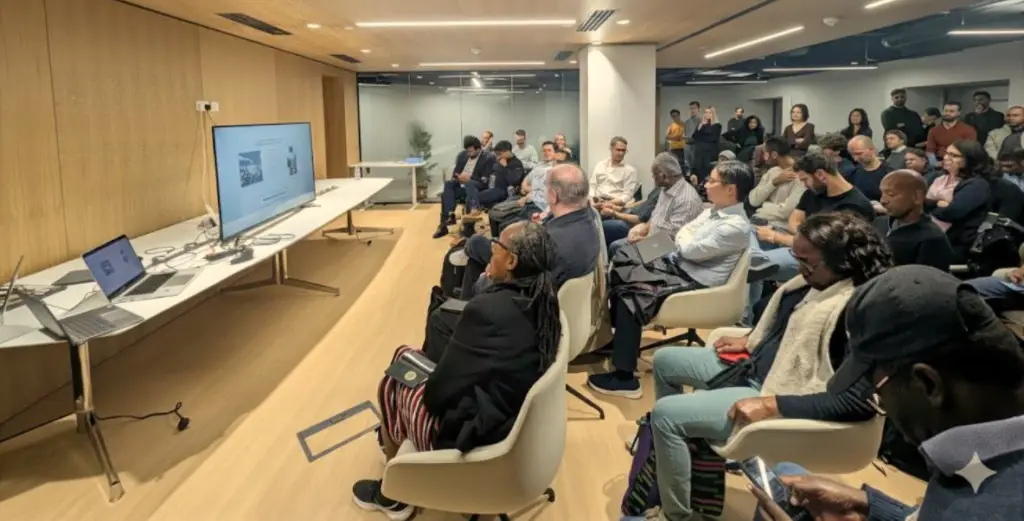
We kicked off with a hearty amount of pizzas, drinks and networking. The room was filled with laughter. As we filled our stomachs, there was a building anticipation of the technical discussions that lie ahead.

Agentic Payment Frameworks: The Next Frontier
Our discussion and talk was centered around agentic payment frameworks. This is an emerging technology will pose changes to the e-commerce, payments and engineering space.
These are the things that need to be addressed carefully before the mass adoption comes in the near future. But the largest players in the field are heavily testing this with a keen eye. Names like Mastercard, Paypal, Revolut, Amex are already on-board.
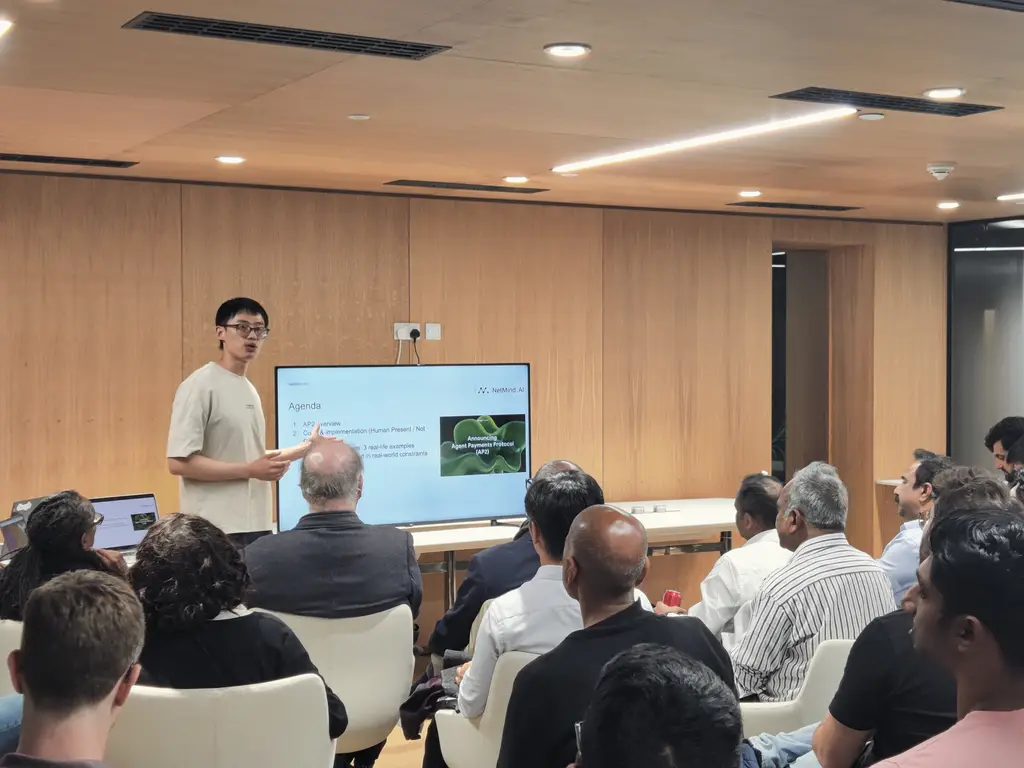
Two main agentic payment frameworks were released in this month alone. The context behind this traction is that AI agents are poised to become more autonomous and capable of executing end-to-end planning transactions on behalf of users. Think about getting the best deal on Amazon locked in right from the chatGPT interface!
We saw this come up soon after several frameworks in the agentic AI space. These were the Model Context Protocol (MCP) and Agent-to-Agent (A2A). With the new AI layer eating almost everything, the first will be the ubiquitous agentic toolkit and the later a communication protocol for agentic collaboration.
The Protocol Landscape
Two major players are emerging in this space:
- Agent Payment Protocol (AP2) by Google
- Agent Commerce Protocol (ACP) by OpenAI
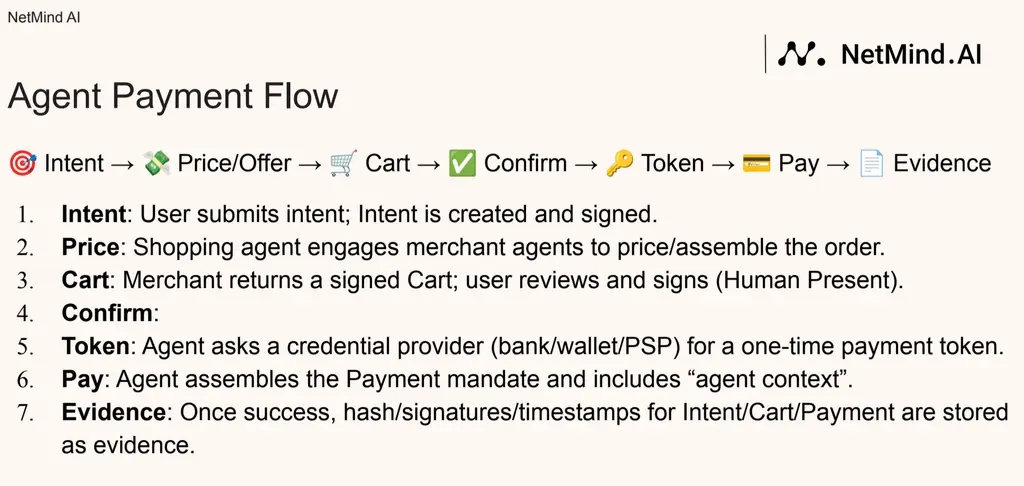
Google's Agents Payments Protocol (AP2) has been generating significant interest, providing a framework for AI agents to handle payments autonomously while maintaining security and transparency.
Hot on its heels, OpenAI’s Agentic Commerce Protocol (ACP) is shaping up to be a strong contender, bringing OpenAI’s perspective on how AI agents should interact with commercial systems.
These are both open-source, meaning that they can be improved by developers across the globe. I am actually surprised or impressed that ACP is already live and working via Stripe. They are calling it ‘Instant Checkout’, completely free of charge and a small percentage of fees are put on the merchant.
This means that chatGPT is the interface, managing the preferences, customer relations and communication between the sellers and the buyer. The development overhead is just one line of code for those already using Stripe! That is pretty incredible.
On the larger scale, there is a good synergy here for A2A to feed into AP2, since there are good overlaps and the framework being built from the ground up to support agents. I can foresee a network or swarms of agents operating across the various e-comm platforms in the future.
In terms of timelines, ACP is already being used by OpenAI at least in the States. It will be a matter of months as we see it cross over to Europe would be my best guess. There isn’t any set adoption roadmap for AP2 as well, so pretty much a watch and wait game here.
Both frameworks will be converging towards a similar goal. For the rest of the article I will be mainly focusing on AP2 for the purpose of simplicity.
Benefits
AP2 is built to support an open and competitive network of payments that is resistant to fraud yet transparent to the user. It is aimed at the global scale. There is a heavy cryptographic work put in which is out of scope for this article, and I am of course more interested in this from a product managers’ perspective.
This covers the whole payments landscape that ranges from the shop and commercial end all the way to the merchant and payment processor.
This is built to address authorisation, authenticity and accountability.
Flexible payments
The idea here is that an agent can flexibly interpret and execute transactions based on the natural language commands given. Here are some ideas to throw out there:
- Given a pot of £100, please spend £10 monthly on flowers for the wife.
- I want the best possible PC accessory for under £300 budget. (Agent goes to check your historical interests and suggests your favourite RGB style mechanical keyboard)
- Getting concert tickets is a huge one and we’ll detail this below.
- Automated shopping of groceries that is connected to a smartfridge, diet plan and medical recommendations from your personal health records.
Human-not-present
The pandemic taught us a few things about how the payments and card space can be innovated. We saw then an accelerated move towards electronic transactions and away from physical currencies. Also digital wallets, or pay-wave was seen as convenient and even crucial for social distancing.
If you are in the payments industry this will already be pretty familiar: card not present.
With agentic payments, you can now sign a detailed intent upfront or ahead of time. This means that the agent can wait, scan the market or be delegated in terms of specific timing. As with the concert tickets, one can set agents to make a purchasing decision the immediate moment they become available. This might become useful for the next Wimbledon or Taylor Swift concert. Here, AP2 does not just act as a simple timer but it is also baking in the authorisation, proof and verifiable credentials for the transaction.
Stablecoins
The protocol will also support alternative web3 ecosystem payment options. This will mean stablecoins, cryptocurrencies would be supported on the AP2 system.
The Challenges Ahead
The discussion wasn’t all optimism. We tackled some thorny problems:
Protecting confidential information How do we ensure sensitive financial data remains secure when AI agents are making autonomous decisions?
Trust frameworks What mechanisms need to be in place for users to trust AI agents with their money? What sort of mechanism is there to revoke the permissions from agents?
Network and engineering overhead. The computational and infrastructure costs of running these systems at scale are not linear but on an exponential scale when you think about network effects. There was a question about DDoS from the audience as well, begging the question on complex cybersecurity guardrails that need to come into place.
These aren’t trivial challenges, and it was refreshing to have honest conversations about the trade-offs and potential pitfalls. Having worked with multi-agent systems I can see how this all gets fairly complex and a complicated intertwined web pretty quickly if unleased.
I will be honest here to say that I am no cryptographic or open banking expert. This is a thought-out and forward thinking framework that has potential. What I am most interested in are the possibilities on the application and implementation side.
Walking out into the cool London air afterward, I kept thinking about how this standard could affect every payment gateway we already have online. This tech is about leveraging the semi-autonomous nature of agents on a whole new level. That’s worth paying attention to.
Join us at the next AICamp event, or connect with me on LinkedIn to stay updated.
Resources
- Xiangpeng’s talk at NetMind.AI
- Google Cloud Blog - Powering AI commerce with the new Agent Payments Protocol (AP2)
- Buy it in ChatGPT: Instant Checkout and the Agentic Commerce Protocol
- For slides and ongoing discussions, join the AICamp Discord community.
Thanks
This would not have been possible without a whole host of incredible people below.
NetMind.AI team
Stacie Chan, Shenghui Tao, Hao Wang, Aktana S., Xiangpeng Wan, Seena
AICamp legends
Bill Liu, Lorentz Yeung, Tibor Ormosi, John Davies
Special thanks
Frank Guan
Everyone who attended and contributed to the incredible discussions.
Events like this remind me why I’m so passionate about open communities in AI. The willingness to share expertise, challenge assumptions, and learn from each other is what drives the field forward.
A limited offer of free credits for AICamp attendees:
- Visit netmind.ai
- Create an account
- Click your profile in the top right corner
- Click “USD” → Payment Settings
- Click “Claim credit” and use code:
NETMINDAICAMP2025
You’ll receive $10 in free credits to explore their platform!